
Chemistry in Build A Basketball Team
Natural positions, lineup swaps, and the OVR math that turns a great card into a bench mistake.
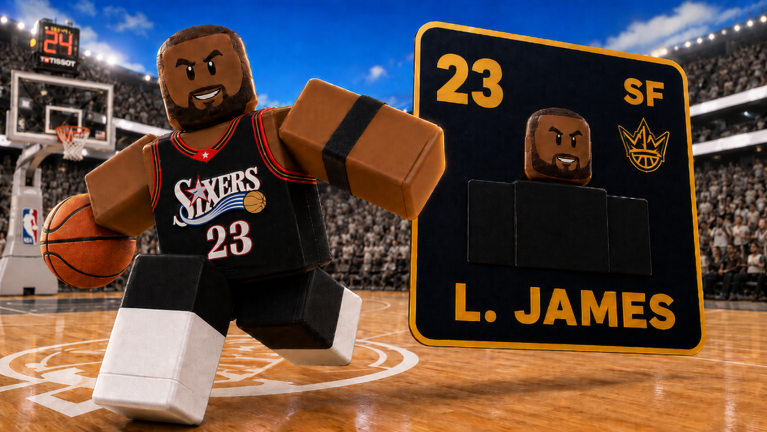
Chemistry is the silent stat in Build A Basketball Team. Bloxive Studios ties team OVR to how well each starter fits their natural position — the role printed on the card — relative to the slot you assign on court. A pull that looks elite in isolation can drag your lineup down if you force it into the wrong job. Understanding that interaction is the difference between clearing 95 OVR and wondering why your shiny MVP barely moved the needle.
Read Getting Started for day-one placement basics and How to Play for when rerolls enter the picture. This guide goes deep on matching, swaps, and failure cases. Pair it with How to Reach 100 OVR when you are optimizing endgame squads.
What chemistry means in this game
Unlike pure card collectors where OVR is fixed on the back of the card, Build A Basketball Team applies a lineup modifier based on position fit. Think of each starter as having:
- Card OVR — Base rating including rarity and variant bonuses.
- Slot assignment — Point guard, shooting guard, wing, forward, center, or equivalent labels in the UI.
- Chemistry result — Bonus when natural position matches the slot; penalty when it does not.
The team OVR number on your finished squad reflects chemistry-adjusted values, not raw sums. Leaderboards and quest thresholds use that adjusted figure, which is why two identical collections perform differently.
There is no official Trello documenting exact percentages during Early Beta, but player testing consistently shows multi-point swings when a high OVR card sits off-role.
Natural position labels and lineup slots
Cards display a natural position drawn from basketball roles. Typical categories include:
- Guards — Point guard and shooting guard profiles; smaller playmakers and shooters.
- Wings — Small forward and hybrid wing players who bridge guard and forward duties.
- Bigs — Power forward and center profiles; rebounders and interior defenders.
Your starting five slots map to these roles. When the card label and slot label align, chemistry is positive or neutral. When you place a center at shooting guard because the OVR number is higher, chemistry applies a penalty that can wipe out the rating edge.
Some cards may list flexible wording in future updates; during Early Beta, trust the primary natural position text shown on the card face.
Why a high OVR card in the wrong slot hurts
Imagine a 94 OVR shooting guard card assigned to power forward because your forward slot was empty. The card OVR still reads 94 in inventory, but the power forward slot applies an off-position penalty. Your team OVR might move less than if you had inserted an 88 OVR true forward with correct chemistry.
This is the most common frustration in How to Reach 100 OVR threads: players reroll away correct-role mid cards to chase shiny mismatches, then blame RNG.
Symptoms of off-role placement:
- Team OVR drops when you insert a higher-rated card.
- Swapping two starters raises OVR without any new pulls.
- Quest targets for team rating stall despite inventory upgrades.
- MVP or shiny variants underperform expectations on leaderboard snapshots.
Fix placement before you spend rerolls or refreshes from Codes.
Swap tips that fix chemistry without new pulls
Before consuming resources, try in-lineup swaps — exchange two starters’ slots and recheck team OVR.
Swap workflow:
- Identify the starter whose natural position clearly differs from their current slot.
- Find another starter who fits the vacated slot better.
- Swap assignments.
- If team OVR rises, stop and lock the lineup.
- If team OVR falls, revert and test a different pair.
Common fixes:
- A wing playing point guard swaps with a true point guard playing wing.
- An oversized forward at center swaps with a natural center playing power forward.
- Two guards on wrong sides swap to align shooting versus playmaking labels.
Document your final arrangement in notes if you are comparing against Build Hub templates or Players role targets.
Chemistry versus rerolls and refreshes
Rerolls and refreshes cannot fix chemistry if you keep accepting off-role upgrades. Use them after swaps fail:
- Reroll when the offer is wrong position for the empty slot you still need to fill.
- Refresh when the pool keeps feeding duplicates at positions you already chemistry-maximized.
How to Play covers timing; the chemistry rule is simple: never reroll a correct-role incumbent just because a shiny off-role card appeared.
MVP, shiny variants, and chemistry
MVP editions and shiny variants often ship with higher base OVR. They still carry a natural position. The variant bonus applies only when the card is legally placed.
Decision tree for a shiny pull:
- Does natural position match an open or upgradeable slot?
- Does inserting the card raise team OVR after chemistry?
- Do you break a link by moving another starter off-role to make room?
If step two fails, store the card as a collection trophy and keep your chemistry-clean starter until a legal swap opens. Tier List rankings assume correct placement; off-role shinies fall tiers fast.
Building around chemistry links
Advanced players draft toward themes — same team, era, or role balance — so future pulls complement existing starters. Early Beta link rules may expand, but position discipline is always the foundation.
Theme tips:
- Finish a chemistry-stable core before refreshing for franchise flavor.
- When a pool offers your team’s center but your center slot is filled off-role, swap first, then accept.
- Compare themed builds on Build Hub instead of improvising mid-draft.
Chemistry checklist before you finish a squad
- Every starter’s natural position matches their slot label.
- No swap between two players raises OVR further.
- MVP or shiny cards sit in legal roles.
- Team OVR meets active Quests thresholds.
- Weakest slot is identified for the next targeted reroll, not a blanket refresh.
Teaching chemistry to new players
If you are helping a friend on day one, have them read Getting Started and watch team OVR while moving one card off-role intentionally — the drop teaches faster than text. Then redeem tuff, thx, or Update from Codes only after they fix slots, so free rerolls upgrade the right roles.
Chemistry is not a side system in Build A Basketball Team; it is half the OVR formula. Master natural positions and swaps, and the path to 100 OVR becomes a planning problem instead of a lottery.
Frequently Asked Questions
Quick answers to the most common questions.
How does chemistry affect OVR in Build A Basketball Team?
Team OVR uses chemistry-adjusted starter ratings. Cards placed in their natural position contribute fully; off-role placements receive penalties that can erase a high card OVR advantage.
Can I fix chemistry without spending rerolls?
Yes. Swap starters between slots until natural positions align with court roles. Many OVR gains come from swaps alone before any reroll is needed.
Do MVP and shiny cards ignore position penalties?
No. MVP and shiny variants still require correct natural position placement to avoid chemistry penalties and maximize team OVR.
Why did team OVR drop when I added a better card?
The new card is likely off-position relative to its slot. Move it to the matching role or swap with another starter, then recheck team OVR before rerolling.